Buying Less, Choosing Better: Why More Americans Are Turning to Artisanal Fashion
Not too long ago, the American shopping experience was pretty straightforward: spot a trend, find the cheapest version of it, wear it a handful of times, and move on. Retail giants made that cycle fast, easy, and almost irresistible. But something has been quietly changing in the way people — especially younger shoppers — think about their wardrobes. And it's not just a trend. It looks a lot more like a values shift.
The Backlash Against the Throwaway Closet
Let's be honest about what fast fashion actually costs us. The price tag on that $12 blouse doesn't reflect the full picture — not the labor conditions that made it possible, not the synthetic dyes running into waterways, and definitely not the landfill it'll end up in after six wears. American consumers are increasingly aware of this math, and a growing number of them don't like what it adds up to.
Millennials and Gen Z shoppers, in particular, have started doing the homework. They're reading labels, researching brands, and asking harder questions before they buy. According to a 2023 survey by First Insight, over 60% of Gen Z consumers say they prefer to buy from sustainable brands — and many are willing to pay more to do it. That's not a niche attitude anymore. That's a market force.
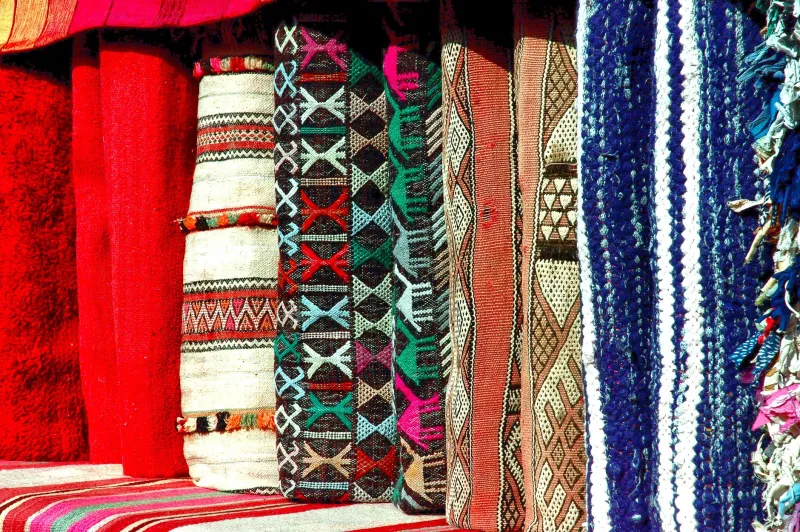
The appeal of artisanal fashion fits neatly into this recalibration. When you buy something handmade — whether it's a hand-blocked printed scarf, a woven tote bag crafted by a cooperative in West Africa, or a hand-embroidered jacket rooted in South Asian textile traditions — you're not just buying a product. You're participating in a supply chain that actually makes sense. The maker is compensated fairly. The materials are often natural and locally sourced. And the item itself is made to outlast whatever's currently on the rack at the mall.
Craft as a Form of Cultural Preservation
There's another dimension to this conversation that doesn't get talked about enough: when artisanal craftsmanship disappears, something irreplaceable goes with it.
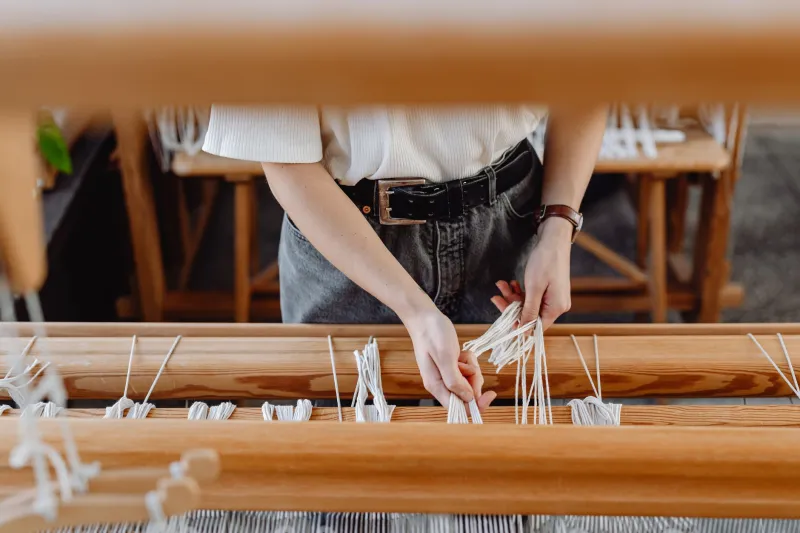
Many of the world's most extraordinary textile traditions — Kente weaving from Ghana, intricate ikat dyeing from Uzbekistan, hand-batik work from Indonesia — are genuinely endangered. They survive because individual artisans and small cooperatives continue to practice them, often passing skills down through families over generations. When consumers choose to invest in those traditions, they're doing something more than shopping. They're helping keep a living art form alive.
At Falake Shop, this is the whole point. The name itself carries that spirit — a nod to the idea that fashion can be a meeting place, somewhere culture and craftsmanship converge rather than get flattened into sameness. Every piece in our collection is chosen because it carries that kind of weight: a history, a technique, a human being's skill and time embedded in every stitch.
"People are hungry for meaning," says one textile artisan we work with, whose family has practiced hand-weaving in their community for four generations. "When someone buys my work, they're not just buying fabric. They're saying this matters. That changes everything."
The Economics of Investing in Quality
One of the most common hesitations people have about artisanal fashion is the price. And yeah — a handwoven piece is going to cost more than something produced in bulk by a machine. That's just the reality. But it's worth reframing how we think about that cost.
Consider what you actually spend on fast fashion over the course of a year. A few impulse buys here, a sale splurge there — it adds up faster than most people realize, and much of it ends up donated, trashed, or shoved to the back of the closet. A well-made artisanal piece, on the other hand, tends to stick around. It's often more versatile, more distinctive, and built from materials that age gracefully rather than falling apart after a few washes.
The cost-per-wear math on a $180 hand-embroidered blouse that you reach for constantly looks a lot better than a $25 version you wore twice before the seams started to go. Slow fashion isn't about spending more overall — it's about spending more intentionally.
What Appreciation Actually Looks Like
It's worth addressing something that comes up in conversations about culturally-inspired fashion: the question of who gets to wear what, and whether buying artisanal pieces from other cultures is respectful or problematic. The short answer is that it depends entirely on how you do it.
Buying directly from artisans or through curated platforms that maintain transparent relationships with makers is appreciation. It supports livelihoods, honors craft traditions, and keeps cultural knowledge circulating in the world. What's different — and what's worth avoiding — is when designs are stripped of their context, mass-reproduced without any benefit going back to the originating community, and sold as costumes or novelties.
Falake Shop sits firmly on the right side of that line. Our curation process is rooted in genuine relationships with makers, a commitment to fair compensation, and a belief that the stories behind the pieces matter as much as the pieces themselves. When you shop with us, you know where your item came from and who made it.
A Different Kind of Shopping Experience
There's something almost countercultural about slowing down your relationship with clothes in 2024. We've been so thoroughly conditioned to expect newness, speed, and constant turnover that choosing to opt out of that cycle can feel almost radical.
But more and more Americans are finding that it also feels really good. There's a satisfaction in owning fewer things that mean more. In wearing something that sparks a conversation because it's genuinely interesting. In knowing that your purchase did something good in the world rather than extracting something from it.
That's the promise of slow fashion, and it's one we're genuinely excited about at Falake Shop. The closet of the future isn't bigger — it's better. And it starts with choosing craft over convenience, story over speed, and meaning over mass production.