So You Spent How Much on That Bag? A Calm Person's Guide to Talking Artisanal Fashion With Your Partner

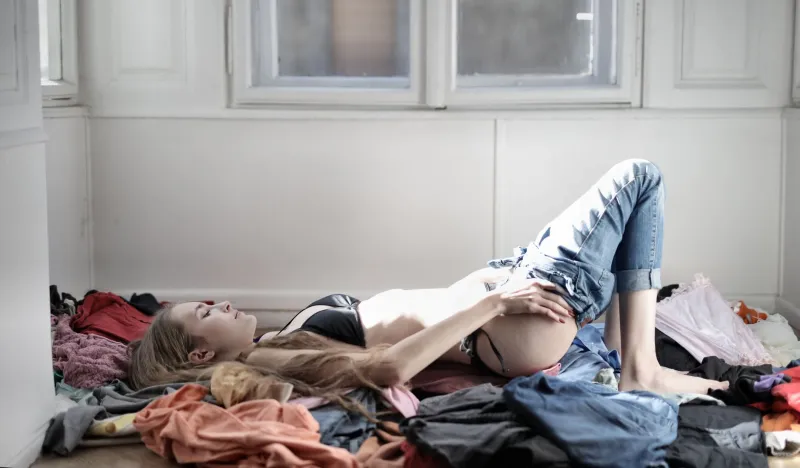
Photo: Kolawole Osinnowo, CC BY-SA 4.0, via Wikimedia Commons
Let's set the scene. You just brought home a hand-stitched leather tote from an independent maker in Santa Fe. You've been eyeing it for two months. You budgeted for it. You feel good about it. Then your partner glances at the price tag still attached and the temperature in the room drops about fifteen degrees.
Sound familiar? You're not alone. For people who genuinely care about artisanal fashion — the kind of clothing and accessories made by real humans with real skills — navigating a relationship with a partner who doesn't fully share that passion can feel like translating a language they've never studied. But here's the thing: you don't need them to become a convert. You just need to find a way to communicate across the gap.
This isn't about defending yourself. It's about building a bridge.
Start With the Story, Not the Price
One of the biggest mistakes people make when justifying an artisanal purchase is leading with cost comparisons. "But it's cheaper than buying three fast fashion versions!" might be factually true, but it often reads as defensive — and defensiveness rarely wins anyone over.
Instead, try starting with the story behind the piece. Who made it? Where did the materials come from? What tradition or technique does it represent? When you explain that the embroidery on your new jacket took a family workshop in Oaxaca three days to complete, you're not talking about a purchase anymore. You're sharing a piece of human history that now lives in your home.
Partners who feel disconnected from artisanal fashion usually aren't against the idea of it — they just haven't been given a reason to care. The story is the reason.
Separate the Emotional Value From the Financial Argument
Here's something worth sitting with: the value of a handmade piece isn't entirely rational, and that's completely okay. There's an emotional weight to owning something made with intention — the way it connects you to a culture, to a maker, to a moment in time. That's real. That matters.
But when money is the source of tension, you'll need to be honest about both layers. Acknowledge that yes, part of why you love this piece is emotional. You don't have to apologize for that. At the same time, make the practical case too — longevity, quality of materials, the fact that you'll still be wearing this five years from now instead of sending it to a landfill.
Keeping those two conversations separate — the heart side and the head side — actually makes both arguments stronger. Your partner can respect the emotional pull even if they're more persuaded by durability and cost-per-wear.
Make Room for Their Perspective (Really)
If your partner is questioning your spending on artisanal pieces, there's a decent chance they have a real concern underneath the skepticism — and it's probably not about the bag itself. It might be about shared financial goals, feeling left out of decisions, or just not understanding why this matters so much to you.
Ask them directly: "What's the part that bothers you most?" Then actually listen. You might be surprised. Sometimes the concern is less "that's too expensive" and more "I feel like I don't understand this part of you." That's a very different conversation — and a much more interesting one.
When you create space for their actual concern instead of the surface-level complaint, you stop talking past each other. And that's when things actually move forward.
Build a Framework That Works for Both of You
Practical solutions matter here. If shared finances are involved, a discretionary spending agreement — where each partner has a set amount each month to spend without needing to justify it — can take a lot of heat out of these conversations before they even start. Many couples find this kind of autonomy actually reduces friction rather than creating it.
If the issue is more about closet space or accumulation, that's worth addressing separately. Maybe you agree to a one-in, one-out rule. Maybe you designate a specific area for your most meaningful pieces so they feel intentional rather than chaotic. Small structural agreements can do a lot of heavy lifting.
And if budget is genuinely tight, being transparent about how you're prioritizing artisanal purchases — maybe fewer but more meaningful pieces, maybe saving over a few months for something specific — shows your partner that this isn't impulsive. It's considered.
Invite Them In Instead of Educating Them
There's a version of this conversation that feels like a lecture, and a version that feels like an invitation. You want the second one.
Next time you're exploring an independent maker's work — whether that's browsing a site like Falake Shop, visiting a local craft market, or watching a short documentary about traditional textile arts — see if your partner wants to come along. Not to convert them. Just to share something you love.
People are far more likely to understand something they've experienced than something they've been explained to. And honestly? A lot of partners who start out skeptical end up genuinely fascinated once they see the craft up close. The moment someone watches a weaver work a loom or hears a maker talk about their process, the price tag starts to make a different kind of sense.
You Don't Need a Full Convert — Just Mutual Respect
Here's the truth: your partner doesn't have to love artisanal fashion the way you do. They don't need to geek out over natural dyes or feel emotional about hand-stitched seams. What you're actually looking for is mutual respect — the same thing you'd want around any deeply held value.
You respect that they might spend money on things you don't fully understand (the golf membership, the vinyl collection, the very specific brand of running shoes). They can extend the same to you. That's not asking for much. That's just being in a partnership with another full human being.
The closet conversation, when it goes well, isn't really about clothes at all. It's about understanding each other a little better — what you value, why you value it, and how you make space for both of you to be fully yourselves. That's worth having, even if it starts with a side-eye at a price tag.
And for what it's worth? The bag is gorgeous. You made a great call.