Your Style Didn't Start With You: How to Read Your Family's Fashion History and Make It Your Own
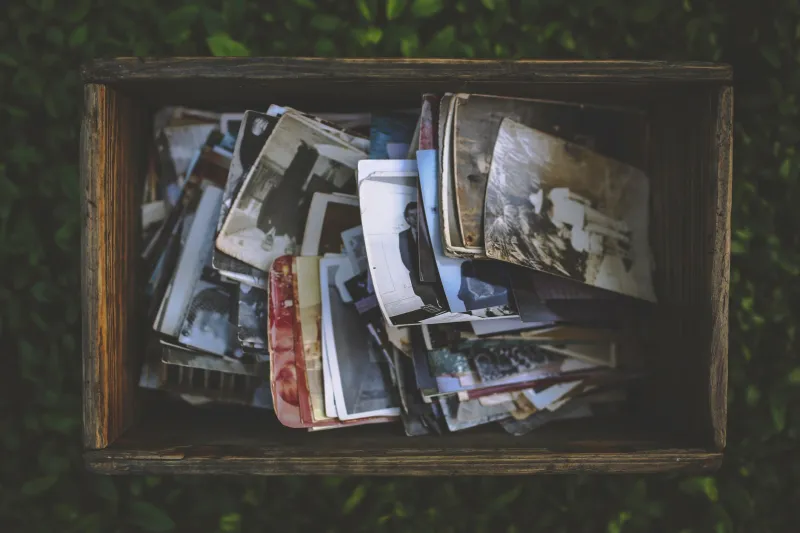
There's a photograph sitting in a shoebox somewhere — maybe in your mom's closet, maybe in a Ziploc bag at your grandmother's place — of someone in your family looking undeniably cool. A great-aunt in a wrap dress with geometric prints. A grandfather in a crisp guayabera. A mother at her prom in something she made herself because the stores didn't carry what she wanted.
That image is not just nostalgia. It's data.
Your sense of style didn't arrive fully formed the first time you scrolled through Instagram or wandered into a thrift store at sixteen. It was assembled, slowly, from a lifetime of visual cues — the colors draped across the women who raised you, the fabrics that filled your childhood home, the pride or shame your family attached to what they wore. Fashion is one of the most intimate forms of cultural transmission we have, and most of us have never stopped to actually read it.
This is your invitation to start.
The First Step: Go Ask Somebody
Before you touch a single item in your own closet, go have a conversation. Call your grandmother. Visit an uncle. Text a cousin who's always been the family archivist. Ask them about the clothes they remember.
Not just the special-occasion stuff — though that matters too — but the everyday pieces. What did your grandmother wear to the grocery store? What did your dad save up for when he was your age? What did your family consider "dressed up" versus "too much"?
You're going to hear things that surprise you. You might learn that a great-grandmother was known in her neighborhood for the way she tied her headwrap, that a grandfather refused to leave the house without a pressed collar no matter what, or that your mom wore the same pair of boots for a decade because she believed in buying once and buying well. These aren't just stories. They're the invisible architecture underneath your own preferences.
Ask specifically about pieces that were kept. What's still in the family? What got passed down, and what got thrown away — and why? The items that survived are the ones someone couldn't let go of. That's worth paying attention to.
Reading the Cultural Context Behind the Clothes
Family fashion traditions don't exist in a vacuum. They're shaped by the communities your people came from, the economic realities they navigated, and the cultural identities they were either celebrating or, sometimes, trying to survive.
For a lot of American families — especially those with roots in the American South, in immigrant communities, in Indigenous or diasporic cultures — clothing carried enormous weight. Getting dressed was often a political act. The Sunday best tradition in Black American communities, for example, wasn't just about looking nice for church. It was a deliberate assertion of dignity in a society that worked hard to deny it. The embroidered blouses passed through Mexican and Central American families carry the visual language of specific regions and Indigenous traditions. The careful preservation of a silk sari or a hand-stitched kilt speaks to an identity someone refused to let assimilation erase.
Understanding why your family dressed the way they did — the history behind the choices, not just the choices themselves — transforms the exercise from nostalgia into something far more powerful. You start to see that the clothes you inherited aren't just fabric. They're arguments your ancestors were making about who they were and who they refused to stop being.
What Your Wardrobe Is Actually Inheriting Right Now
Here's the part that might make you a little uncomfortable: you're already living out some of this inheritance, whether you've noticed it or not.
That instinct to never wear anything too flashy? Could be your family's survival strategy, adapted into your aesthetic. The pull toward natural fabrics and earth tones? Maybe it echoes something older than your own memory. The way you hoard a particular type of shoe, or always reach for a specific silhouette — these patterns often have roots.
Sit with your current wardrobe for a minute and ask: what did I actually choose, and what did I absorb? There's no right answer. Some of what you inherited is worth keeping. Some of it is worth consciously releasing. The point isn't to reject your family's influence — it's to understand it well enough that you're making real choices rather than just running old code.
Building On the Legacy — Or Deliberately Breaking It
Once you've done the genealogical work, you get to decide what to do with what you find.
For some people, the answer is continuation. You want to honor the traditions you discovered, to wear them forward with intention and context rather than accident. If that's you, this is exactly where artisanal and culturally-rooted fashion becomes irreplaceable. Seeking out makers who are working within living craft traditions — weavers, embroiderers, textile artists — lets you invest in pieces that carry real heritage rather than its commercial simulation. A hand-blocked print from a small independent studio isn't the same as a mass-market knockoff of the same pattern. One has a maker. One has a machine. The difference matters when you're trying to build something meaningful.
For others, the answer is a deliberate departure. Maybe the fashion traditions in your family were defined by constraint — by what was affordable, by what was "acceptable," by what kept people safe. Maybe you're the first person in your family who gets to dress purely for joy. That's its own kind of inheritance to honor, because the freedom you have now was earned by people who didn't have it. Wearing something bold, something handcrafted, something that announces your full self — that's not a betrayal of where you came from. It might be exactly what they were working toward.
The Heirloom Question
If you have access to actual inherited pieces — a coat, a scarf, a piece of jewelry, a bag — figure out what they need to re-enter your life. Some things just need to be worn. Others need a tailor or a careful cleaning. Some might be too fragile for daily use but could live beautifully on display.
And if you don't have heirlooms — because they were lost, sold in hard times, or never made it through the generations intact — you can start creating them now. The artisanal pieces you invest in today are the ones your kids or nieces or chosen family might be holding onto in forty years, wondering who you were and what mattered to you.
That's the thing about fashion that fast retail has tried to make us forget: clothes can carry memory. They can hold a person's shape even after that person is gone. They can tell a story across decades that no caption, no post, no highlight reel ever could.
Where to Start This Week
You don't need to overhaul anything immediately. Start small:
- Make one phone call. Ask one relative about a piece of clothing they remember loving or being proud of.
- Pull out one inherited item (or a photograph of one, if the piece is gone) and sit with it. What does it tell you?
- Identify one current item in your wardrobe that feels genuinely you versus one that feels like it came from someone else's script.
- Research one craft tradition from your family's cultural background and find a contemporary maker working within it.
Your style is a living document. It has a past — longer and richer than you probably know — and it has a future you're actively writing right now. Understanding the genealogy of how you dress isn't a detour from finding your personal style. It might be the most direct route there.