The Repair Bench Doesn't Judge: What a Tailor Can Actually Save
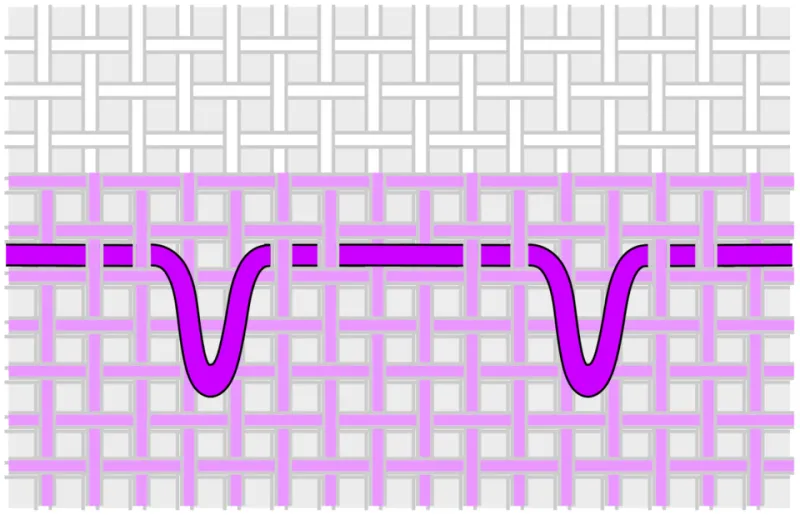
Photo: Stilfehler, CC BY-SA 4.0, via Wikimedia Commons
The jacket comes in folded, the way people fold things they're embarrassed about. There's a hole at the left elbow the size of a quarter, the lining has gone at the underarm, and the cuff is frayed down to the warp. The owner says, almost apologetically, that they assume it's finished.
It usually isn't. Ask any working tailor and you'll hear a version of the same speech: most of what walks through the door isn't dead, it's tired. And there's a meaningful difference between the two.
What a mender sees in the first thirty seconds
Before anything else, a good tailor reads the fabric. Not the brand, not the price tag — the cloth. Is it a tight weave with intact fibers around the damage, or is it shattering, where the yarn itself is giving way across a whole panel? Is the leather dry but sound, or has it gone soft and crumbly in a way that means the tanning is finished? Is the wool sturdy or has it felted into a mat that can't be needled through cleanly?
That read determines everything. It's also the reason a repair quote can vary by a factor of five for what looks like the same job.
The fixable list
Most of what people retire could come back. Seams that have given way at the underarm or crotch. Hems that came apart because the thread was the weak link, not the fabric. Buttons and buttonholes. Zippers, which are tedious and expensive but eminently replaceable. Worn cuffs that can be turned, replaced, or bound with tape. A coat lining, which is a real job but a common one. Moth holes in wool, which can be rewoven or darned so the repair nearly vanishes. Blown-out knees on jeans, fixable with a patch behind the tear and a darn over it. Leather soles, resoled. Heels, reheeled. A stretched-out neckline on a knit — that one depends, and a tailor will tell you so.
On a handcrafted piece, there's an extra upside. Small-batch garments usually have more seam allowance, sturdier interlining, and construction meant to be opened back up. A mass-market coat is often glued. A well-made one is stitched, which means it can be disassembled and put back together by someone who knows what they're doing.
The list nobody wants to hear
Some things genuinely can't be saved, and pretending otherwise wastes everyone's money.
Fabric that's shattered across a large area can be patched, but the patch will keep spreading. Sun-bleached color cannot be restored. Felted wool won't un-felt. Silk that has dry-rotted — where it tears if you look at it — is done, no matter what the label says. Leather that's cracked through the grain rather than just scuffed can sometimes be filled, but it will crack again in the same place. And a piece that's been sitting in a hot attic for fifteen years is often weaker than it looks.
A good mender will tell you when to stop. That's not a lost sale to them. It's the reason people come back.
What it actually costs
Prices vary enormously by city and by shop, but here's roughly where things land in 2026 dollars. A basic hem, $15 to $30. Tapering a shirt, $25 to $40. Replacing a standard zipper, $35 to $75, with outerwear and heavy-duty zippers at the top of that range or above. Relining a coat, $150 to $350 depending on how much of the original construction has to be rebuilt. Reweaving a moth hole, $40 to $100 and up, because it's slow handwork. Darning a sock or a sweater elbow, $10 to $25. Resoling leather boots, $80 to $150.
Compare that to replacing a well-made coat, and the math usually favors the bench. Not always — a $60 fast-fashion jacket is not worth a $200 reline, and a tailor will say so.
Visible mending stopped being a compromise
For a long time, the goal of repair was invisibility. That's still true for a suit. But a growing number of American wardrobes now treat the repair as part of the design, and the techniques driving it are old, specific, and worth naming honestly.
Sashiko, the Japanese running-stitch tradition, and boro, the layered patching practice that grew out of necessity in northern Japan, are the two most cited. Kantha stitching from South Asia, darning on knits, and appliqué traditions from West Africa all show up on the same bench. What separates this from a trend cycle is knowledge: the people doing it well have usually studied the technique and can tell you where it came from. The ones doing it badly have stitched a trendy line onto a jacket and called it heritage.
The honest version is simple. A visible repair says the garment was worth keeping. That's a statement about the wearer, not about a culture being borrowed for a look.
Choosing someone to trust
Ask three things before you hand over anything irreplaceable. First, what's your turnaround, and does it change with the season? (It does — September through November is brutal.) Second, have you worked with this kind of fabric before? Handwoven cotton, raw silk, and heavy leather all behave differently, and a brilliant alterations shop isn't automatically a great mending shop. Third, can I see examples of similar repairs you've done?
Then look at the shop. Not for chic — for evidence. Does the person handle the garment like it's a garment or like it's an item on a list? Do they point out a second problem you hadn't noticed? Do they tell you when a repair isn't worth it?
The question before the next purchase
There's a reframe hiding in all of this, and it's the one worth carrying out of the shop. The most sustainable garment you will ever own is usually the one already hanging in your closet — one stitch, one patch, one replaced zipper away from another decade of wear.
So before you buy the next thing, ask what happens to it in year seven. Is there seam allowance? Can the lining be replaced? Is the fabric sturdy enough to be mended? A maker who can answer those questions is selling you a garment with an afterlife.
And on the way out, ask your tailor what they'd charge to fix the elbow. It's probably less than you're afraid of.