Stitched Between Two Worlds: The Immigrant Makers Quietly Redefining What American Fashion Looks Like
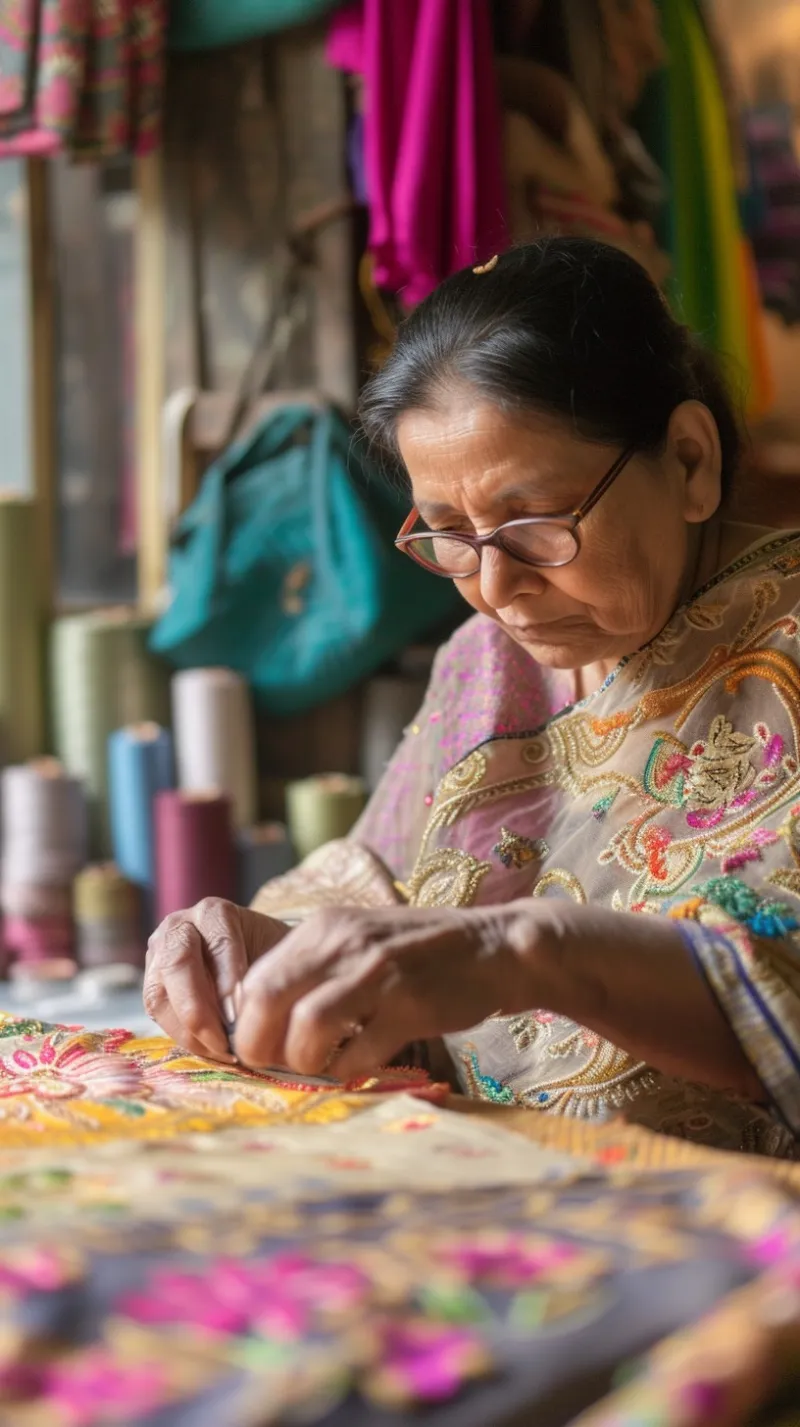
Photo: immigrant artisan woman sewing traditional embroidery in modern studio, via images.stockcake.com
There's a persistent myth in fashion that the most "authentic" handcrafted pieces come from somewhere far away — a village in Oaxaca, a workshop in Marrakech, a textile district in Gujarat. And while those traditions are genuinely extraordinary, this narrative quietly erases something happening right here at home: a generation of immigrant artisans who carried their craft knowledge across borders and are now building something entirely new on American soil.
They're not making replicas of the work they grew up with. They're not trying to recreate the past. They're doing something more interesting — weaving their cultural heritage into an American context, producing fashion that is simultaneously rooted and forward-moving, deeply personal and broadly resonant.
The Hyphenated Aesthetic
Call it the hyphenated aesthetic. It's the design language of someone who grew up learning a traditional craft from a grandmother in Lagos or Lahore or Lima, then moved to Brooklyn or Los Angeles or Chicago and started asking: what does this look like here?
The answers are showing up across every corner of American independent fashion — in hand-embroidered denim jackets that blend West African kente patterns with classic Americana silhouettes, in ceramics-inspired textile prints drawn from Korean celadon traditions, in leather goods that marry Andean geometric motifs with the clean lines of contemporary minimalism.
This isn't cultural fusion for the sake of novelty. It's something more organic — the natural creative output of people who contain multitudes and refuse to choose between them.
The Craft Came With Them
For many immigrant makers, the decision to bring their craft to the US wasn't a business strategy. It was survival — a way of staying connected to identity when everything else was shifting.
Take the experience of Senegalese-born textile artists who've built studios in cities like Atlanta and Minneapolis, working with indigo-dyed fabrics using techniques passed down through family lines. Or Korean-American designers in Los Angeles who trained in traditional hanji papermaking and have adapted those methods to produce accessories and garment elements that have no real Western equivalent. Or the growing community of Guatemalan weavers who've relocated to parts of California and continue producing backstrap-loom textiles — now sold through their own direct-to-consumer channels to customers who understand exactly what they're holding.
In each case, the craft didn't stop when they crossed a border. It adapted. It absorbed new influences, new materials, new contexts — and came out the other side as something genuinely original.
Why This Challenges the "Made Abroad" Assumption
American consumers have been trained, often by well-meaning sustainable fashion advocates, to associate handmade craftsmanship with geographic distance. The implicit message: if it's made nearby, it's probably mass-produced; if it's made far away by someone in traditional dress, it's authentic.
This framing does a disservice to immigrant makers who are doing extraordinarily skilled work right here — and often struggling to get the same recognition or price premiums that equivalent goods from abroad receive. A hand-woven piece made by a Bolivian-American artisan in Queens deserves the same appreciation as one shipped directly from La Paz. The hands are equally skilled. The story is equally rich. In fact, it carries an additional layer — the story of migration, of cultural persistence, of adaptation.
Supporting these makers isn't just about buying a beautiful object. It's about recognizing that American craft has always been a composite — built from the skills, traditions, and creative visions of people who came from somewhere else and made something new here.
The Design Language of Migration
What makes the work of immigrant artisans particularly compelling from a design standpoint is the productive tension at its core. These pieces don't sit neatly in any single tradition. They're not quite folk art, not quite contemporary design, not quite American and not quite from wherever their maker calls home.
That in-between space is where the most interesting fashion lives right now. It's why a hand-embroidered jacket that references both Appalachian quilting traditions and Vietnamese thêu embroidery stops people in their tracks. It's why a handbag that draws on both Moroccan leather craft and New York street aesthetics feels simultaneously familiar and entirely new.
American style has always absorbed from the outside in. What's different now is that the makers themselves are here, telling their own stories directly, without intermediaries flattening the narrative into something more marketable.
Where to Find This Work
If you want to connect with immigrant-owned artisan brands, the best starting points are usually local — craft markets, neighborhood studios, community-based maker collectives. Cities with large immigrant communities (New York, LA, Miami, Chicago, Houston) tend to have rich ecosystems of independent makers who sell both locally and online.
When you're shopping, look for transparency. The best artisan brands — immigrant-owned or otherwise — are happy to tell you who made something, where, and why. They'll point you to the specific cultural tradition behind a technique. They'll explain what the design references and what it means to them personally. That narrative isn't marketing fluff. It's the actual value you're buying.
A New American Fashion Story
The story of American fashion has never been a single thread. It's always been a braid — strands from dozens of cultural traditions, pulled together into something that couldn't have existed anywhere else.
Immigrant makers aren't an asterisk to that story. They're central to it. They always have been. What's changing is that we're finally paying attention — and that the tools of independent commerce make it possible for these makers to reach audiences directly, without having their identity sanded down to fit someone else's idea of what "authentic" looks like.
At Falake Shop, that's the work we find most exciting. Not fashion that travels from a far-off place to tell you a story about someone else's culture. Fashion made by people who are here, whose lives are here, and whose craft carries the full complexity of living between worlds.
That's not niche. That's the future of American style.