Grandma's Coat, Your Rules: How to Make Inherited Clothes Feel Like Yours Again
There's a particular kind of guilt that lives in the back of a closet. It hangs quietly, usually in a garment bag, or folded inside a box that smells like someone else's perfume. You know the piece. Maybe it's your grandmother's wool coat. Your dad's leather jacket from the '80s. A hand-embroidered blouse your aunt wore to every holiday dinner for two decades. You kept it because getting rid of it felt wrong. But wearing it? That feels complicated too.
Hand-me-downs and inherited clothing sit at a genuinely strange intersection of love, memory, and identity. And for a lot of us — especially those of us who grew up in families where things were kept, repaired, and passed along as a matter of course — the emotional weight of these pieces can be almost impossible to sort through.
So let's try.
The Weight Isn't in the Fabric
Before you can figure out what to do with an inherited piece, it helps to understand what you're actually feeling when you look at it. Because the discomfort usually isn't about the garment itself — it's about what the garment represents.
Some inherited pieces carry pure joy. You reach for them naturally, they fit your life, and wearing them feels like a quiet conversation with someone you loved. Those are the easy ones. Keep them. Wear them with zero ceremony.
But other pieces carry something heavier. Obligation. The unspoken expectation that because someone gave this to you, you owe it a place in your life. Or grief — the piece is so tied to a person that putting it on feels like too much. Or identity friction, where the garment is beautiful and meaningful but just... not you.
Naming which category your inherited pieces fall into is genuinely the first step. Pull them out. Hold them. Ask yourself honestly: Does this bring me something good, or does it mostly bring me guilt? That answer matters more than you might think.
What "Honoring" Actually Means
Here's a reframe worth sitting with: honoring an inherited piece doesn't mean wearing it unchanged, forever, exactly the way the original owner did. That's preservation, not honoring. Honoring means acknowledging the story the garment carries while also giving it a future.
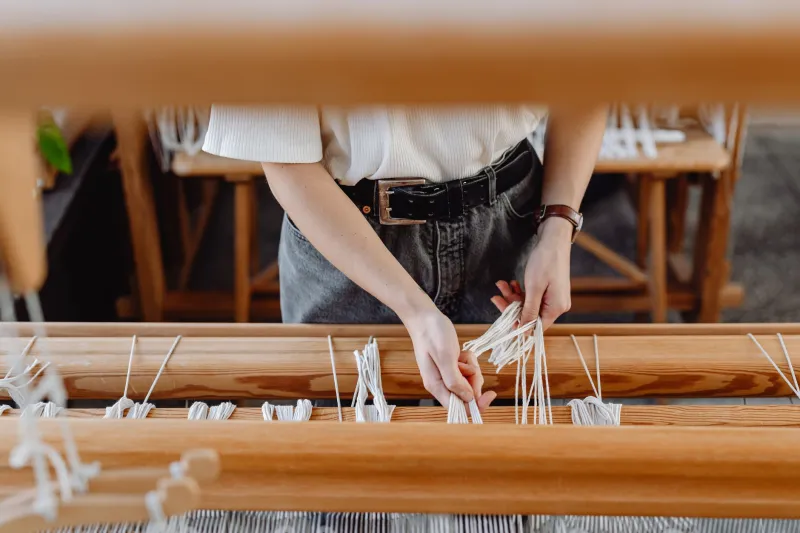
Think about what artisans do with traditional textiles. A weaver in Oaxaca doesn't abandon her grandmother's patterns — but she might introduce a new colorway, a different silhouette, a contemporary application. The lineage is intact. The story continues. It just doesn't stop at the grandmother.
You can apply the exact same logic to the coat in your closet.
The Case for Artisanal Alterations
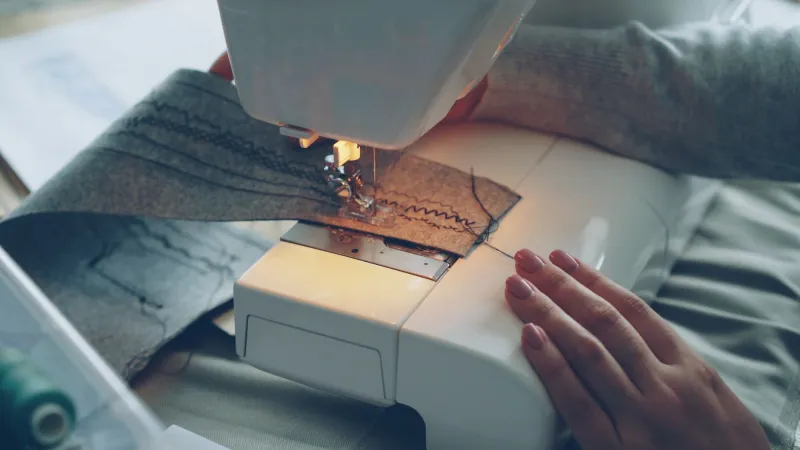
This is where things get genuinely exciting, if you let them. Because one of the most powerful things you can do with an inherited garment is take it to a skilled tailor or textile artisan and have it remade — not replaced, remade — into something that actually fits your life.
A vintage blazer with beautiful bones but a boxy '90s cut can be restructured into something sharp and modern. An embroidered blouse with a neckline that never worked for you can be altered, the embroidery preserved and repositioned. A beloved quilt that's too fragile to use can be transformed into a statement jacket lining, so you carry it with you without risking it.
These aren't acts of disrespect. They're acts of continuation. And when you work with an independent maker or a skilled local tailor — someone who genuinely understands fabric, construction, and craft — the result is something that belongs to both stories simultaneously. Theirs. And yours.
When you're looking for someone to trust with a piece like this, ask questions. How do they handle original details? Can they preserve specific elements — a button, a pocket, a hand-stitched hem — while reworking the rest? A maker who takes that conversation seriously is a maker worth your time and your heirloom.
The Pieces That Really Aren't You (And What to Do With Them)
Sometimes, after all the reflection and all the reimagining, you look at a piece and you just know: this isn't going to work. It doesn't fit your body, your aesthetic, your life. And no amount of alteration is going to change that.
This is okay. Truly.
If you've genuinely considered a piece and it still doesn't have a place in your wardrobe, you have options that don't involve shoving it back into a guilt-bag.
- Pass it to someone it fits better. Another family member, a friend who actually loved the original owner, someone who would wear it with real joy.
- Donate it with intention. Vintage and secondhand shops, especially those that specialize in quality or culturally significant pieces, can give a garment a new life with someone who will genuinely love it.
- Archive it without wearing it. Not everything needs to be functional. Some pieces can live in a cedar chest, properly stored, as a family artifact rather than a wardrobe item. That's a legitimate choice.
- Commission something new from its materials. If the fabric itself is meaningful but the garment isn't, a skilled artisan can sometimes repurpose the textile into something else entirely — a pillow, a framed piece, a bag.
Letting go of a piece doesn't mean letting go of the person who gave it to you. Memory lives in you, not in fabric.
Building Your Own Story on Top of Theirs
There's something quietly profound about the way clothing carries history. When you think about it, every garment that has ever been passed down was once someone's deliberate choice — something they saved up for, or wore on a meaningful occasion, or reached for on an ordinary Tuesday because it made them feel like themselves.
When you inherit that piece, you're not just inheriting cloth and thread. You're inheriting a moment of someone else's selfhood. And what you choose to do with it — keep it as-is, transform it, pass it along, or let it go — is itself a statement about who you are.
The goal isn't to erase the original story. It's to write the next chapter. And if you do that with intention — if you approach inherited clothing the way you'd approach any meaningful purchase, with thought and care and a willingness to ask hard questions — you end up with a wardrobe that's genuinely layered. Rich with history. Entirely your own.
That's not a small thing. That's actually the whole point.
At Falake Shop, we believe fashion is always in conversation with the past — and that the most interesting style choices are the ones that know their own history. Browse our curated collection of artisanal and culturally-inspired pieces that are made to become part of your story, not just your closet.