Raising the Next Generation of Intentional Shoppers: Real Talk About Fast Fashion, Heirlooms, and Everything In Between

Photo: SpeakingArch, CC BY-SA 4.0, via Wikimedia Commons
Let's be honest: telling a twelve-year-old that the $8 graphic tee they're begging for was probably made in a factory with zero labor protections is not exactly a dinner-table win. Eyes glaze over. Phones come out. And suddenly you're the fashion police, which wasn't the vibe you were going for.
But here's the thing — kids are way more receptive to these conversations than we give them credit for. The trick isn't a TED Talk on supply chains. It's making craftsmanship feel cool, tangible, and personal. And honestly? That's not hard when you know where to start.
Start With Touch, Not Lectures
For younger kids — we're talking five through nine — the whole concept of "quality" lives in their hands, not their heads. Before you explain anything about artisan labor or ethical sourcing, let them feel the difference.
Pull out something handmade from your own closet. A woven scarf, an embroidered jacket, a leather bag with a story. Let them run their fingers across it. Ask them what they notice. Kids are naturally curious about texture, and that curiosity is your opening.
Then, the next time you're in a fast-fashion store, let them hold a similarly styled item off the rack. You don't have to say a word. Most of the time, they'll feel the difference themselves — the flimsiness, the chemical smell, the way the stitching puckers. That sensory comparison does more work than any conversation you could script.
The Allowance Experiment (It Works, We Promise)
One of the most effective tools for teaching intentional purchasing is also the most obvious: money. Specifically, their money.
For kids in the 10–13 range, try this: the next time they want a piece of clothing, offer to contribute the equivalent of what a fast-fashion version would cost. If they want something better — something handmade, something that'll actually last — they cover the difference themselves.
This isn't about being stingy. It's about making the value equation real. When a kid spends their own birthday money on a hand-stitched denim jacket from an independent maker, they wear that thing like armor. They take care of it. They notice when the quality holds up after a year of heavy rotation. That's a lesson no lecture delivers.
Talking to Tweens Without Losing Them
Middle school is where peer pressure enters the chat, loudly. Trend cycles move fast at this age, and the social stakes of wearing the "wrong" thing feel enormous. This is not the moment to double down on sustainability speeches.
Instead, reframe the conversation around identity.
Ask them what they want their style to say about them. Most tweens have a surprisingly clear sense of this — they just haven't connected it to their purchasing decisions yet. When you link intentional buying to self-expression rather than environmental guilt, the whole dynamic shifts.
You might say something like: "Anyone can buy the same thing from the same place. But that piece? Nobody else has that." Uniqueness is a genuine selling point at this age. Lean into it.
Teenagers and the Algorithm Problem
Here's where it gets complicated. Teens are living inside a content loop that serves them new trends approximately every 48 hours. Micro-trends, de-influencing, haul culture, "quiet luxury" — the vocabulary changes faster than the clothes themselves.
Rather than fighting the algorithm, use it. Follow artisan makers together. Search out small brands with transparent production stories. Show them that the same platforms pushing disposable fashion are also full of creators who obsess over fabric weight, hand-dyeing techniques, and generational craft traditions.
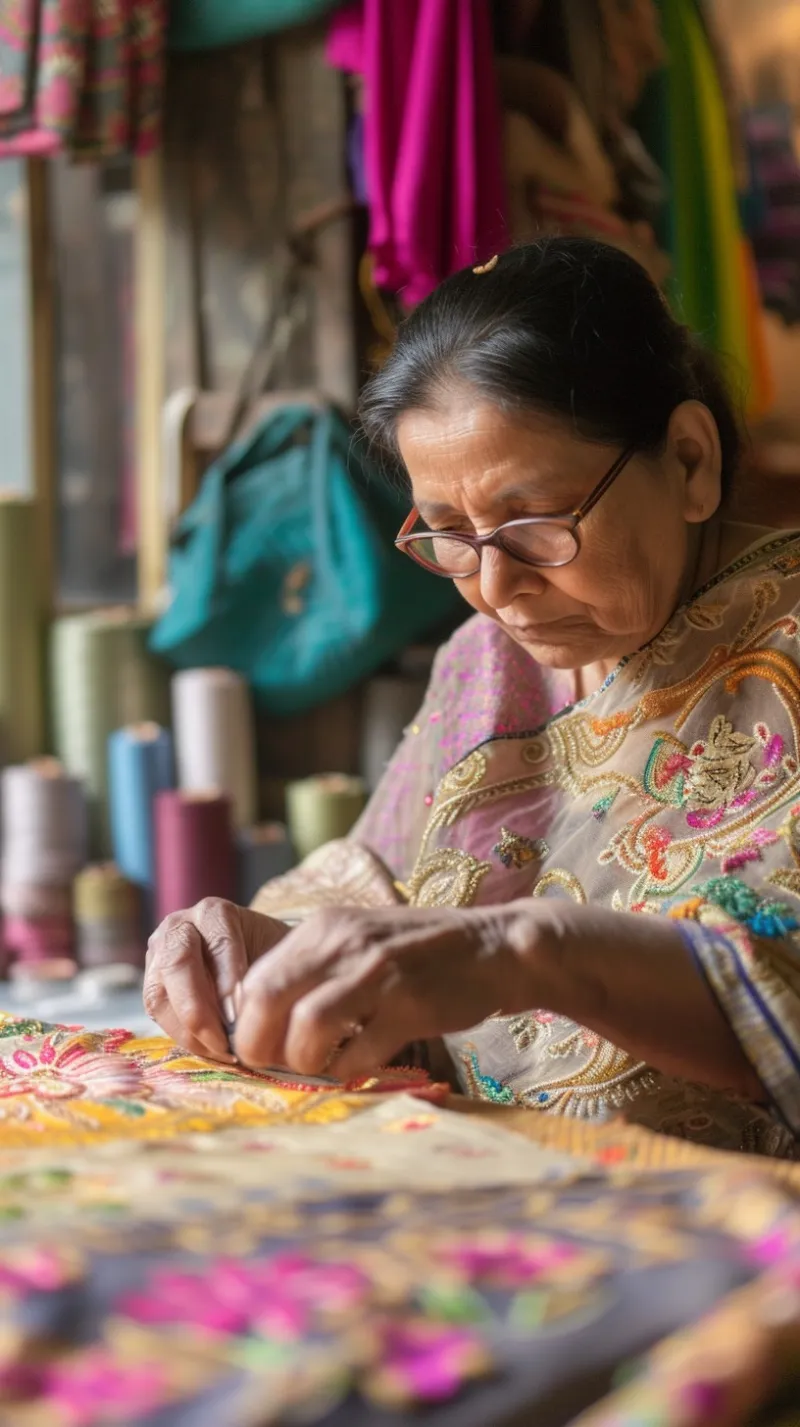
There's a whole corner of social media dedicated to makers showing their process — the hours of hand-embroidery, the sourcing of natural dyes, the story behind a weaving pattern passed down through a family for centuries. That content is genuinely compelling. You don't have to sell it. Just put it in front of them and let it do its work.
The Heirloom Conversation
At some point, the conversation about clothing naturally bumps up against the question of legacy. What do we keep? What gets passed down? What's worth holding onto?
This is actually a rich entry point for kids of all ages. Dig out something from your own family — a piece of clothing that belonged to a grandparent, an aunt, a parent. Tell its story. Where was it made? Who wore it and when? What does it represent about where your family came from?
Kids who understand that clothing can carry a story are far more likely to treat their own wardrobe with intention. It stops being just stuff and starts being something closer to memory.
If you don't have a family heirloom to point to, that's okay — this is actually a beautiful opportunity to start building one. Choose a piece together. Something handmade, something meaningful, something that'll hold up over decades rather than seasons. Let your kid be part of that decision. They'll remember it.
A Few Practical Conversation Starters
Not sure how to kick any of this off? Here are a few low-pressure openers that actually land:
- "What's the oldest piece of clothing you own? Do you know where it came from?"
- "If you could only keep ten things in your closet, what would they be and why?"
- "Do you know who made the clothes you're wearing right now?"
- "What would you want someone to find in your closet fifty years from now?"
None of these feel like homework. All of them open doors.
The Long Game
Raising intentional shoppers isn't a single conversation — it's a slow, ongoing one. Some days your kid will come home with a $6 fast-fashion impulse buy and you'll bite your tongue. That's fine. The goal isn't perfection; it's awareness. A kid who thinks about what they're buying, even occasionally, is already miles ahead of where most adults are.
And the more they're exposed to the beauty of real craftsmanship — the cultural weight of a hand-blocked print, the satisfying heft of quality stitching, the story behind a maker who poured genuine skill into something that'll outlast a dozen trend cycles — the harder it becomes to go back to the throwaway alternative.
That's not a lecture. That's just taste. And taste, it turns out, is something you can absolutely teach.