From Grandmother's Loom to Your Wardrobe: A Real Guide to Dressing With Cultural Heritage
There's a particular kind of magic in putting on something that carries history. Not vintage-store-find history, but your history—a blouse sewn from fabric your grandmother brought from West Africa, a belt woven in a pattern your great-grandmother learned as a child in Oaxaca, a shawl dyed with indigo using techniques that have traveled through your family for generations.
For a lot of Americans, that connection to textile heritage is complicated. Maybe you grew up far from the country your family came from. Maybe the traditions were interrupted—by migration, by assimilation pressure, by the plain practical business of survival in a new place. Maybe you're only now, as an adult, starting to ask questions about where your people came from and what they made.
Wherever you are in that process, this guide is for you. Dressing with cultural heritage isn't about performing identity or getting every historical detail perfect. It's about finding a living relationship between who you are now and where you come from—and letting that show up in how you dress.
Start With What You Actually Have
Before you buy a single thing, do an inventory. Open the boxes. Go through the closets. Talk to your relatives.
You might be surprised what's already in your orbit. A hand-embroidered tablecloth that could become a statement skirt lining. A sari in a color you've always loved but never known how to wear. A piece of hand-loomed fabric that's been sitting folded in tissue paper for twenty years because nobody knew quite what to do with it.
These pieces are starting points, not museum artifacts. If they're in good condition and you love them, they can be worn or incorporated into wearable pieces by a skilled tailor or textile artist. If they're too fragile or meaningful to alter, they can still inform your aesthetic—the colors, the motifs, the weight and texture—as you build out your wardrobe.
And if you don't have family textiles to draw from, that's okay too. The conversation with your relatives about what those traditions were is valuable on its own. What did your grandmother wear? What fabrics were considered special? What did your family make versus buy? These stories point you toward a heritage even when the physical objects aren't there.
Learning the Language of Your Heritage Textiles
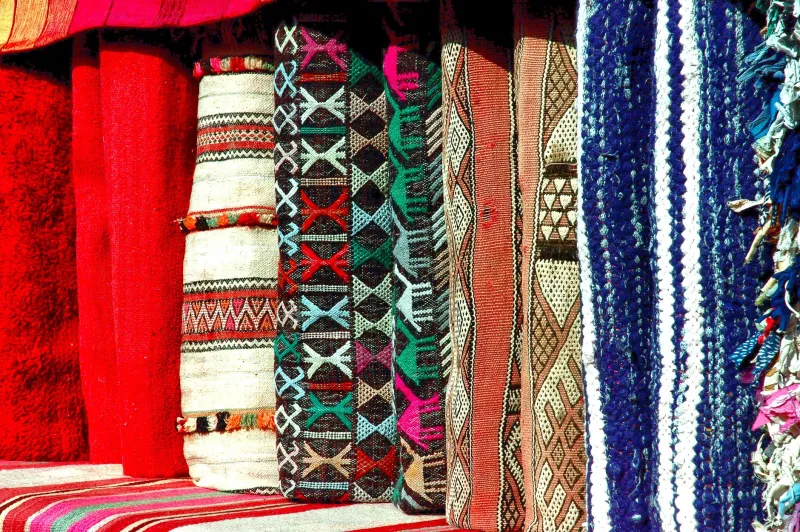
Every textile tradition has its own vocabulary—specific weaving structures, dyeing methods, pattern systems, and regional variations that carry meaning. You don't need a degree in textile history to engage with this, but a little context goes a long way.
If your heritage includes kente cloth from Ghana, for example, knowing that different color combinations carry specific social meanings changes how you think about wearing it. If you're drawn to the ikat textiles of Central Asia or Southeast Asia, understanding that the resist-dyeing process used to create those blurry, luminous patterns is extraordinarily labor-intensive helps you recognize and seek out authentic examples versus machine-printed imitations.
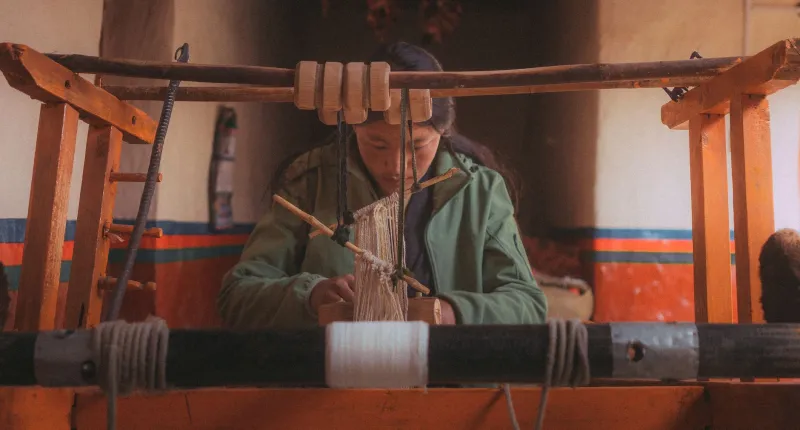
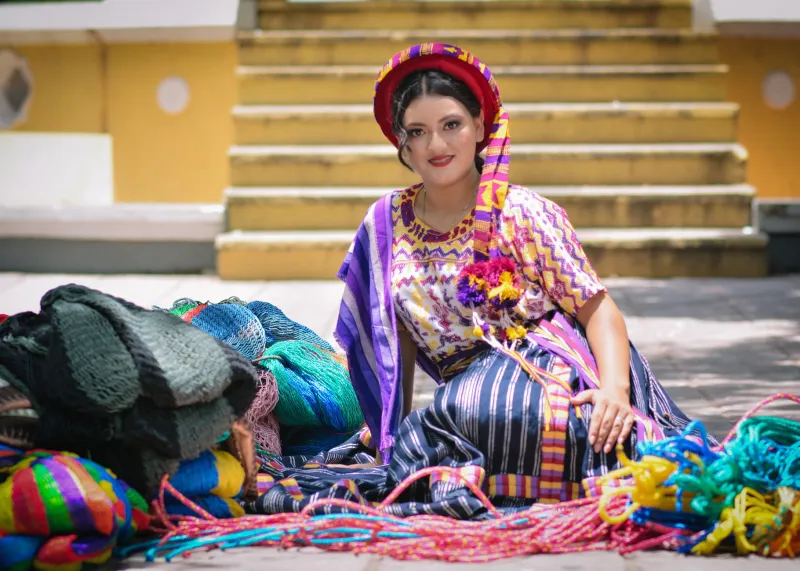
For Mexican and Central American heritage, the regional specificity of huipil embroidery or backstrap loom weaving means that a garment from Oaxaca and one from Chiapas are telling completely different stories—even if they look superficially similar to an outside eye.
This kind of knowledge isn't gatekeeping—it's appreciation. It helps you make better choices about what you're buying, who you're buying from, and how you're wearing what you have.
Pairing Heritage With Contemporary Silhouettes
One of the most common hesitations people have about incorporating traditional textiles into their everyday wardrobe is the fear of looking like they're wearing a costume. The fix is usually pretty simple: anchor heritage pieces with contemporary silhouettes and modern basics.
A hand-block-printed Indian cotton fabric made into a straight-leg trouser reads as thoroughly modern. Traditional West African wax print in a tailored blazer cut is striking and completely wearable in a professional context. A length of Japanese boro-style indigo fabric repurposed as a wide belt over a simple white dress creates something that feels original without erasing the textile's history.
The key is treating heritage textiles the way you'd treat any exceptional fabric—letting the material be the statement and keeping everything else relatively clean. If you're wearing a heavily embroidered blouse, pair it with simple, well-fitting pants. If your heritage textile is bold in pattern, let the silhouette be classic.
Fit matters here too. Getting a traditional garment tailored to your actual body, or commissioning a piece made from heritage fabric in a contemporary cut, often makes the difference between something that feels like dress-up and something that feels like yours.
Finding the Right Brands and Artisans to Support
Not everyone has family textiles to draw from, and even those who do often want to expand their heritage wardrobe with newly made pieces. This is where intentional shopping becomes important.
Seek out brands and artisans who are actually from the communities whose traditions they're working in. A Zapotec weaver from Oaxaca selling their own work is a completely different proposition from a fast fashion brand printing a digital approximation of Zapotec patterns on polyester. The first supports a living tradition and the person carrying it. The second extracts cultural aesthetics for profit while the community that created them sees nothing.
Look for transparency about who made the piece and where. Look for fair pricing—traditional textiles that are genuinely handmade take significant time and skill, and prices that seem too good to be true usually mean someone in the supply chain isn't being paid fairly. Look for artisans who can tell you about the specific tradition they're working in, not just a vague geographic label.
For US consumers, there are increasingly strong platforms and marketplaces specifically dedicated to connecting buyers with artisans from specific cultural communities. Doing a little research before you buy is worth the effort—and often leads you to pieces that are more interesting and more meaningful than what you'd find otherwise.
Wearing It Without Overthinking It
There's a version of this conversation that can spiral into anxiety—am I doing this right, am I appropriating, what will people think? And while those questions have their place, they can also become a reason to never engage at all, which helps no one.
If you're honoring your own heritage, you have standing to engage with it in whatever way feels authentic to you. If you're engaging with a heritage that isn't yours, the questions of sourcing, context, and community benefit become more important—but they're navigable.
Start with what feels genuine. Wear things because you love them and because they connect you to something real, not because they look cool in a detached, trend-chasing way. Let the story be part of how you talk about what you're wearing—not in a performative way, but because the story is actually interesting and worth sharing.
Your wardrobe can be a place where your family's history shows up in the present tense. That's not a small thing. Dress like it matters—because it does.