Spend Once, Wear Forever: The Smart Shopper's Playbook for Building a Handcrafted Wardrobe That Lasts
Let's talk about the jacket you bought on sale three years ago. You've worn it maybe a dozen times. The zipper is already pulling. The lining is doing something strange near the left shoulder. You don't hate it, but you don't love it either — and you're already kind of eyeing its replacement.
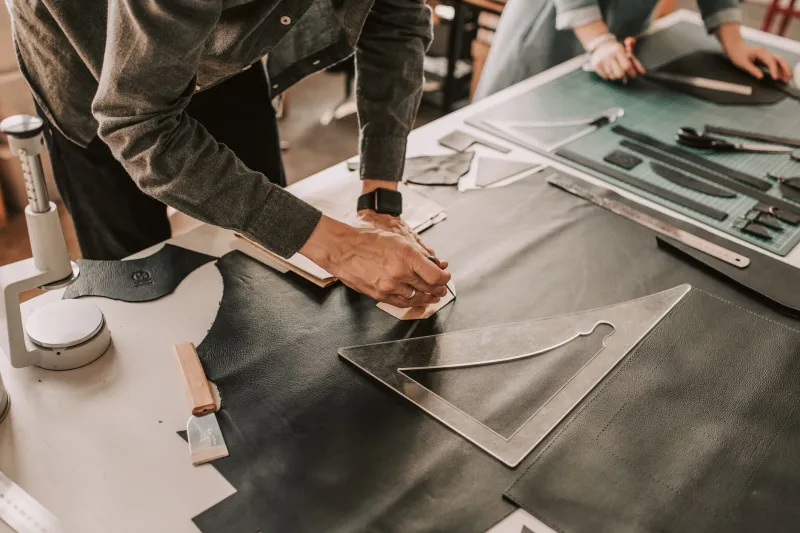
Now imagine a different jacket. One that cost three times as much, that you deliberated over for weeks, that a craftsperson in Vermont stitched together from full-grain leather using techniques they've refined over fifteen years. That jacket is getting better with age. It fits your body differently now — more personally. You're not shopping for its replacement. You're thinking about who you might eventually pass it down to.
That's the difference between fast and lasting. And once you understand it, it's hard to unsee.
The Real Cost-Per-Wear Math
Before we get into the specifics of what to look for, let's address the number that stops most people: the price tag.
A handcrafted leather bag from an independent maker might run $350–$600. A comparable-looking mass-produced version might be $75. On the surface, the choice seems obvious. But run the numbers over time:
- The $75 bag, if it lasts two years before the strap frays or the zipper fails, costs you roughly $37.50 per year.
- The $400 artisanal bag, if it lasts fifteen years (and with proper care, it will), costs you about $26 per year — and looks better at year ten than it did at year one.
That's before you factor in the environmental cost of replacing the cheap version multiple times, the emotional drain of buying things you don't love, and the quiet satisfaction of owning something genuinely excellent.
This is the investment piece logic, and it holds up across categories: shoes, knitwear, outerwear, denim, jewelry.
How to Evaluate Craftsmanship Before You Buy
Knowing a piece is "well-made" can feel abstract until you know what to actually look for. Here's a practical breakdown:
Construction and Seams
Turn the garment inside out. Are the seams finished cleanly — with a French seam, flat-felled seam, or neat overlock? Or are they raw and fraying? In a quality piece, the interior should look almost as considered as the exterior. Check that stitching is even and tight, with no loose threads or puckering at stress points like armholes and pocket openings.
Materials and Origin
Natural fibers — wool, linen, silk, leather, cotton — almost always outlast synthetics and age more gracefully. Look for transparency about where materials come from. A maker who can tell you that their wool is sourced from a specific mill in upstate New York or their leather comes from a family-owned tannery in Pennsylvania is demonstrating a level of supply chain awareness that usually correlates with overall quality.
Hardware and Fasteners
On bags, belts, and outerwear, metal hardware is a dead giveaway for quality (or its absence). Solid brass or nickel hardware feels heavy and substantial. Lightweight, hollow, or plastic-coated metal tarnishes quickly and breaks at the worst times. Buttons on a quality coat should be sewn with a shank and a thread bar on the reverse — not glued or loosely attached.
Fit and Proportion
Artisanal pieces often have a more considered silhouette than mass-produced equivalents. Look for clean lines that don't rely on excessive structure or padding to hold their shape. A well-cut piece should look good on a hanger and on a body — and should retain its shape after washing or wear.
Categories Worth the Investment
Not every wardrobe category benefits equally from the investment approach. Here's where to prioritize:
Outerwear is the highest-return investment. A coat or jacket is worn hundreds of times over years. A handcrafted wool overcoat from a small American maker, properly stored and occasionally reconditioned, can last decades.
Footwear is where craftsmanship pays off most tangibly. Goodyear-welted soles can be resoled repeatedly, effectively making a quality shoe immortal. Look for full-grain leather uppers, cork footbeds, and makers who offer resoling services.
Knitwear — specifically sweaters and cardigans made from quality wool, cashmere, or alpaca — improves with careful wear and washing. Pilling on quality knitwear is normal and easily managed with a fabric shaver; it doesn't indicate poor quality.
Leather goods (bags, belts, wallets) develop a patina over time that makes them more beautiful, not less. This is one of the few categories where "used" genuinely looks better than "new."
Denim from small-batch makers using selvedge fabric is another sleeper investment — the more you wear it, the more it conforms to you specifically.
What Timeless Actually Means in Design
Timeless doesn't mean boring. It means a piece isn't anchored to a single season's aesthetic — that its silhouette, color palette, and detailing feel relevant across years and contexts.
A good test: look at the piece and try to place it in a specific year. If you can't — if it could plausibly belong to several different decades — that's a strong sign of design longevity. Extreme proportions, novelty prints, and logo-heavy styling tend to feel dated quickly. Clean lines, considered proportions, and quality materials tend to feel fresh for a long time.
Building the Collection Intentionally
The goal isn't to replace your entire wardrobe overnight. That would be expensive and, frankly, wasteful in its own way. The investment wardrobe approach is a slow build — replacing things as they wear out, adding one or two considered pieces per season rather than a dozen impulsive ones.
Start with the items you reach for most. Then, when one eventually needs replacing, make that replacement count. Research makers. Read reviews from people who've owned pieces for years. Ask questions before you buy.
At Falake Shop, we believe that every piece in your wardrobe should earn its place — not just by looking good, but by meaning something, lasting somewhere, and connecting you to the hands that made it. That's not a luxury standard. It's just a better way to shop.