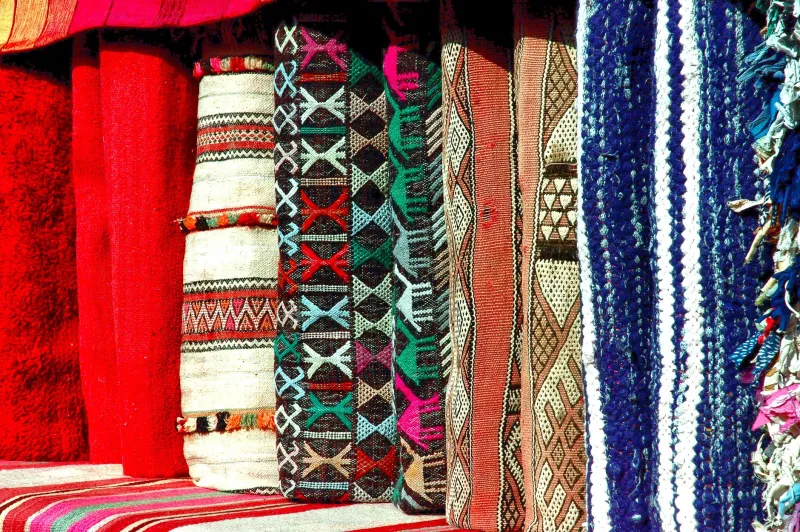
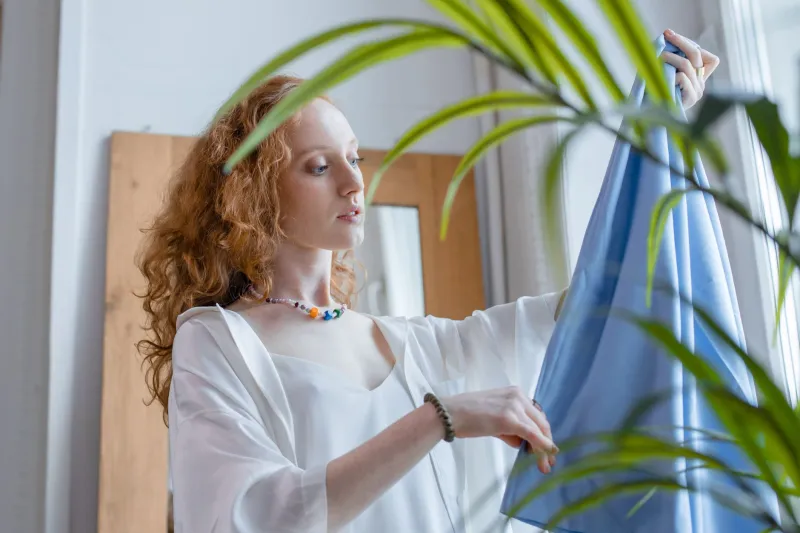
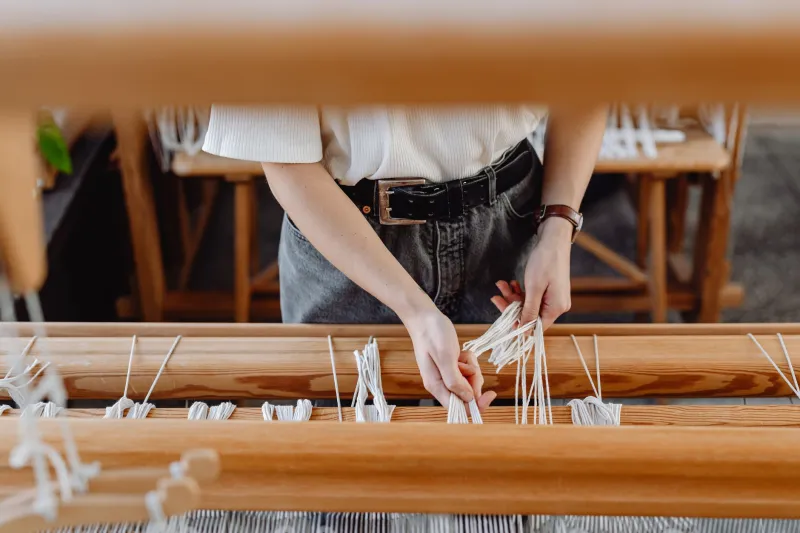
Threads on the Brink: 5 Ancient Textile Arts Making a Stunning Comeback in Contemporary Fashion
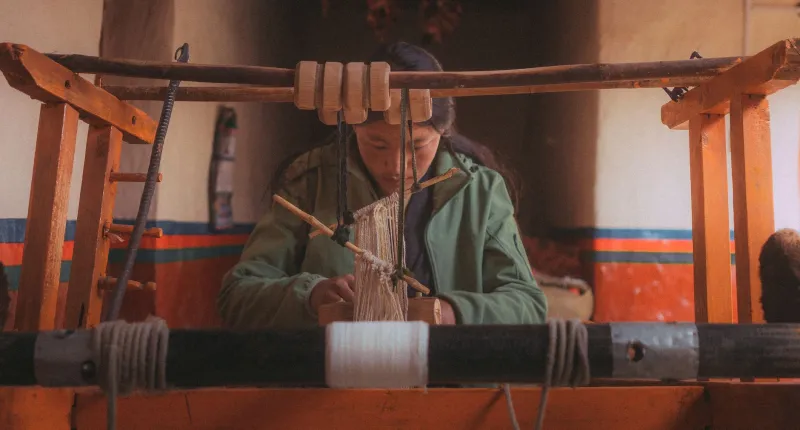
Fashion has always borrowed from history. But there's a meaningful difference between borrowing and rescuing — and right now, a growing community of designers around the world is doing the latter. They're tracking down nearly extinct weaving techniques, partnering with the last remaining practitioners of ancient dyeing traditions, and translating centuries-old craft into garments that feel urgent, alive, and entirely of this moment.
These aren't museum pieces. They're coats, bags, dresses, and scarves being worn on city streets from Portland to Atlanta. And behind each one is a story worth knowing.
Here are five endangered textile crafts that are getting a second life — and how you can be part of keeping them going.
1. Jamdani Weaving (Bangladesh)
The Craft: Jamdani is a form of supplementary weft weaving practiced on the banks of the Buriganga River in Bangladesh for over 2,000 years. The technique involves weaving intricate floral and geometric motifs directly into fine muslin, thread by thread, entirely by hand. At its peak, Jamdani muslin was so sheer it was called "woven air" — a fabric prized by Mughal emperors and European royalty alike.
Why It Nearly Disappeared: Colonial-era trade policies decimated the Dhaka muslin industry in the 18th and 19th centuries. British textile imports undercut local weavers, and many master craftspeople abandoned the trade for generations. By the late 20th century, only a handful of weavers still possessed the knowledge to produce true Jamdani.
Who's Reviving It: UNESCO added Jamdani to its Intangible Cultural Heritage list in 2013, which helped funnel attention and resources toward its revival. Bangladeshi designer Bibi Russell has been a longtime champion of the craft, working directly with weaving communities to create contemporary collections that bring Jamdani to global runways without stripping it of its cultural context. Newer brands like Aarong have built entire product lines around supporting Jamdani cooperatives.
How to Support It: Look for brands that explicitly name their Jamdani weavers or cooperatives. Purchasing directly from Bangladeshi artisan platforms or from US-based curators who source ethically from the region puts money directly into the hands of the people keeping this tradition alive.
2. Araucanian Weaving (Chile and Argentina)
The Craft: The Mapuche people of southern Chile and Argentina have practiced a form of backstrap loom weaving for centuries, producing richly patterned textiles called chamantos and ponchos. The geometric designs are not purely decorative — they encode cosmological beliefs, family histories, and social identity. Each pattern is a kind of visual language.
Why It Nearly Disappeared: Centuries of colonization, forced displacement, and cultural suppression pushed Mapuche traditions to the margins. Younger generations, facing economic pressure and cultural assimilation, moved away from the craft. The knowledge of specific patterns and their meanings was at serious risk of dying with the elders who held it.
Who's Reviving It: Chilean designer Sebastián Pino and several independent Mapuche-led collectives have worked to document patterns and create market opportunities for weavers. Some collectives now sell directly to international buyers, cutting out intermediaries and retaining more of the value of their work. The key here is that the revival is largely being led by Mapuche women themselves — which matters enormously for authenticity and cultural integrity.
How to Support It: Seek out Mapuche-owned cooperatives when purchasing. Be cautious of mass-produced "inspired by" versions that use the aesthetic without the community connection.
3. Adire Cloth (Nigeria)
The Craft: Adire is a resist-dyeing tradition practiced by Yoruba women in southwestern Nigeria, producing bold indigo-dyed textiles with intricate patterns created through tie-dye (adire eleso) or hand-painted starch resist (adire eleko) techniques. Each cloth is essentially a one-of-a-kind artwork, with patterns that carry specific symbolic meanings.
Why It Nearly Disappeared: The arrival of cheap, synthetic-dyed imported fabrics in the mid-20th century devastated the market for handcrafted Adire. The labor-intensive process couldn't compete on price, and many practitioners shifted away. The knowledge of traditional pattern meanings began to erode as the economic incentive to pass it on diminished.
Who's Reviving It: Nigerian designers like Lisa Folawiyo and Duro Olowu have brought Adire-inspired textiles into the international fashion conversation, styling them in ways that resonate with contemporary global aesthetics while keeping the craft's Yoruba roots visible. Within Nigeria, organizations like the Adire African Textiles project have worked to document techniques and support practicing artisans. US-based African fashion curators are increasingly stocking pieces that feature authentic Adire, making it more accessible to American shoppers.
How to Support It: When shopping African-inspired fashion, ask whether the textile is authentic and produced in community with Nigerian artisans — or whether it's a print reproduction. The difference matters, both culturally and economically.
4. Kutch Embroidery (India)
The Craft: The Kutch region of Gujarat, India, is home to some of the most extraordinary embroidery traditions in the world — a constellation of distinct styles practiced by different communities, featuring mirror work, geometric patterns, and densely layered stitching in vivid color palettes. Each community's style is immediately recognizable and has been refined over generations.
Why It Nearly Disappeared: The 2001 Gujarat earthquake devastated the Kutch region, killing thousands and destroying the economic infrastructure that supported artisan communities. Many skilled embroiderers lost their tools, their workshops, and their markets overnight. The disaster accelerated a decline that had already been underway as machine-made alternatives undercut handmade prices.
Who's Reviving It: The recovery of Kutch embroidery is one of craft revival's genuine success stories. Organizations like Khamir and Shrujan have spent decades connecting artisans directly to designers and consumers, providing training, fair wages, and market access. Global designers including Stella McCartney and Dries Van Noten have incorporated Kutch embroidery into runway collections — though the most sustainable support comes from brands that maintain long-term, direct relationships with artisan groups rather than one-off collaborations.
How to Support It: Look for pieces that name the specific embroidery community or cooperative involved. Several US-based boutiques and platforms now carry authenticated Kutch work — it's worth seeking them out.
5. Brocade Weaving of Oaxaca (Mexico)
The Craft: In the Zapotec and Mixtec communities of Oaxaca, Mexico, backstrap loom brocade weaving has been practiced for millennia. The technique produces elaborately patterned textiles — often depicting animals, deities, and natural imagery — that are woven with a supplementary weft on narrow looms. The process is extraordinarily slow; a single huipil (traditional blouse) can take months to complete.
Why It Nearly Disappeared: Commercial textile imports, the cultural pressure on Indigenous communities to assimilate, and a lack of economic opportunity for weavers pushed many young people away from the tradition. Designs were also frequently copied and mass-produced without compensation to the communities that created them — a form of cultural theft that further devalued the original craft.
Who's Reviving It: Designers like Carla Fernández have built their entire practice around collaborating with and fairly compensating Indigenous Mexican artisans, including Oaxacan weavers. Within Oaxaca, weaving collectives led by Zapotec women are increasingly selling directly to international buyers through fair trade platforms. The conversation around intellectual property rights for Indigenous textile designs has also gained momentum, with some communities successfully pushing back against unauthorized reproduction.
How to Support It: This is a case where buying directly from weaver cooperatives — or from brands with verified, equitable relationships with those cooperatives — makes the biggest difference. And if you love the aesthetic, take a moment to learn whose design you're actually wearing.
The Takeaway
Every one of these crafts carries centuries of human ingenuity, cultural memory, and community identity within it. When they disappear, something irreplaceable goes with them. But fashion — at its most thoughtful — has the power to do more than just look good. It can be a genuine act of preservation.
At Falake Shop, we think about this every time we curate a new piece. The question isn't just "is it beautiful?" — it's "who made it, why does it matter, and what does buying it actually support?" Those are the threads worth following.