One Scarf, One Season: The Surprising Ripple Effect of Buying From an Independent Maker
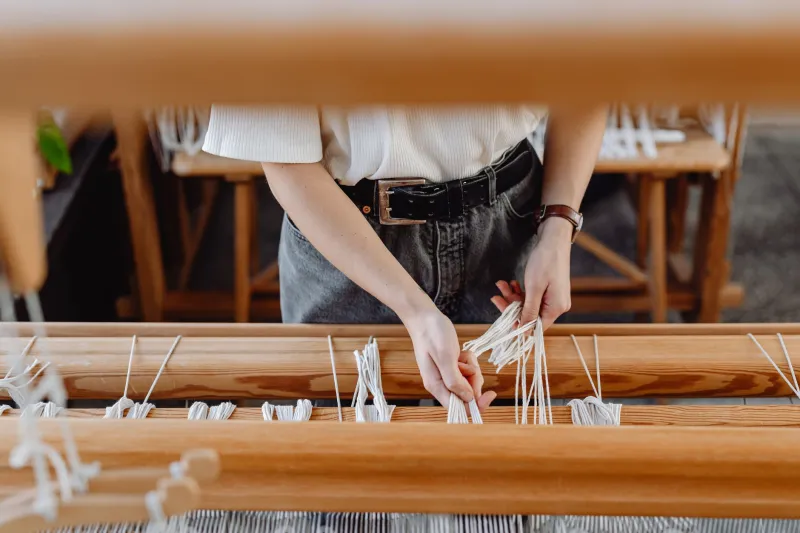
Let's say you buy a hand-woven scarf. Maybe it's $85. Maybe it stretched your budget a little, and you hesitated before hitting confirm. You close the laptop, the package arrives ten days later, and you move on with your life — happy with your purchase, but not really thinking much about what happened on the other end of that transaction.
Here's the thing: a lot happened.
For an independent artisan, a single sale isn't just a sale. It's a mortgage payment contribution, a school supply run, a signal to keep going. The economics of handcrafted fashion are wildly different from what happens when you buy a $12 scarf from a fast fashion site — and understanding that difference changes how you shop, permanently.
The Math Behind the Maker
When an artisan prices a piece, they're not padding margins for a corporate shareholder. They're calculating the cost of raw materials (often ethically sourced and more expensive than synthetic alternatives), the hours of skilled labor involved, packaging, platform fees, and shipping. After all of that, many independent makers are clearing a modest profit — sometimes less than $20 on an $85 item.
That's not a complaint; it's context. Because that $20 isn't going into a faceless revenue pool. It's going directly into someone's household, and from there, it fans out in ways that compound.
A maker who runs a small textile business out of, say, Santa Fe or rural Georgia or a Brooklyn apartment might use that margin to restock dye supplies from a local vendor. That local vendor restocks from a regional distributor. The maker's kid gets new sneakers before the school year starts. Their neighbor, who helps with finishing work on busy weeks, picks up a few extra hours. The ripple is quiet, but it's real.
Why Volume Doesn't Tell the Whole Story
Mass production operates on volume logic: make millions of units, slash the cost per item, move inventory fast. It's efficient in a narrow economic sense. But the value created by that efficiency concentrates at the top — in corporate profits and shareholder returns — while the people doing the actual work at the bottom of the supply chain often see very little of it.
The artisan economy inverts that structure. Volume is low, but value distribution is remarkably direct. When you buy from an independent maker, you're essentially cutting out five or six layers of intermediaries who each take a slice. The money lands closer to the hands that made the thing.
For US consumers who care about where their dollars go — and more of us do than ever — this is worth sitting with. Supporting an independent maker isn't charity. It's a different kind of economic participation. You're opting into a system that rewards skill, time, and cultural knowledge rather than speed and scale.
The Confidence Factor Nobody Talks About
Here's something that doesn't show up in any financial breakdown but matters enormously: what a sale does to a maker's sense of possibility.
Running a small creative business is emotionally grueling. There are weeks where nothing sells, where the algorithm buries your listings, where you seriously consider going back to a regular job. A purchase — especially one accompanied by a thoughtful message or a five-star review — can be the thing that tips the balance toward continuing.
That continuation matters. Because an artisan who keeps going develops their craft further, trains others, passes techniques to the next generation, and contributes to a living cultural tradition rather than letting it quietly disappear. Your $85 scarf is, in a very non-dramatic but very real way, an investment in whether that tradition survives another decade.
Community as Infrastructure
Independent makers rarely operate in total isolation. Many are embedded in informal economies of mutual support — sharing studio space, swapping materials, referring customers to each other, collaborating on pop-ups and markets. When one maker's business gains momentum, it often lifts adjacent businesses too.
Think about what a thriving artisan community does to a neighborhood or a small town. It attracts creative foot traffic. It keeps dollars circulating locally rather than siphoning them out to distant corporate headquarters. It creates the kind of cultural texture that makes a place feel worth living in.
This is the version of 'shopping local' that goes deeper than a bumper sticker. It's about understanding that your consumer choices are, in aggregate, votes for the kind of economy you want to inhabit.
What Conscious Shopping Actually Looks Like
None of this means you need to only buy handmade everything, forever, starting now. That's not realistic, and purity culture in ethical consumption tends to burn people out fast. What it does mean is that when you have the option — when you're looking for a gift, refreshing a key wardrobe piece, or treating yourself to something that'll actually last — choosing an independent maker is a decision with outsized positive impact relative to its cost.
A few practical ways to make that choice count even more:
- Leave a review. Seriously. Reviews are currency for small businesses. A genuine, specific review does more than you know.
- Share the story. When you post that piece on Instagram or tell a friend where you got it, you're extending the maker's reach without them spending a dime on marketing.
- Buy direct when you can. Platforms take significant cuts. If a maker has their own website, buying there puts more money in their pocket.
- Ask questions. Reaching out to ask about a piece, the materials, or the process builds a relationship — and makers remember customers who treat them like the skilled professionals they are.
The Bigger Picture
At Falake Shop, we spend a lot of time thinking about the intersection of culture and commerce — about what it means to build a wardrobe that reflects real human stories rather than just trend cycles. The artisan economy isn't a niche hobby or a nostalgic throwback. It's a genuinely different way of organizing value, one that centers the people who make things and the communities they come from.
Your next purchase is a small decision with a larger footprint than you might think. That scarf doesn't just keep you warm. It keeps a craft alive, a family fed, and a maker at their loom — ready to create the next beautiful thing.